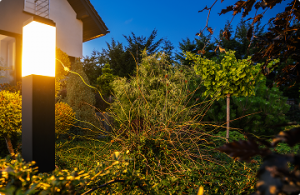
Outdoor lighting can completely change how a home looks at night. It can highlight architecture, improve safety, and make outdoor spaces more usable after sunset. But when it is done poorly, the result is the opposite. Instead of a clean, intentional design, homeowners are left with uneven brightness, harsh glare, dark patches, and fixtures that feel out of place.
In Toronto, where homes range from compact urban properties to larger suburban lots, outdoor lighting in Toronto needs careful planning. The same approach does not work everywhere, and that is where most problems begin.
This guide breaks down the most common mistakes homeowners make when planning and installing outdoor lighting services in Toronto, and why these issues have a bigger impact than most people realize.
Mistake 1: Treating Outdoor Lighting as an Afterthought
One of the most common issues starts before any installation even begins. Many homeowners decide on outdoor lighting after the landscaping, driveway, or exterior upgrades are already complete.
This limits what the lighting can actually achieve.
When lighting is not part of the initial plan, fixtures get placed wherever there is space instead of where they are needed, wiring routes become restrictive, key architectural features are missed, and the overall design feels disconnected.
Outdoor lighting works best when it is considered as part of the property design, not something added at the end. Without that planning stage, even high-quality fixtures can produce a weak visual result.
Mistake 2: Overlighting the Property
More light does not automatically mean better lighting.
Many Toronto homeowners assume that adding more fixtures will improve visibility and appearance. In reality, too much lighting can flatten the entire design of a home.
Overlighting often leads to loss of depth and contrast, harsh brightness that feels unnatural, reduced focus on architectural features, and a commercial or parking-lot appearance instead of a residential feel.
Good outdoor lighting creates layers. Some areas are softly illuminated, while others are highlighted more strongly. When everything is equally bright, the design loses its structure.
Mistake 3: Poor Fixture Placement
Placement is one of the most overlooked parts of outdoor lighting design, yet it has one of the biggest impacts on the final result.
A well-designed system considers viewing angles from the street and entry points, shadow direction from trees and structures, distance between fixtures, and the height and spread of light.
When placement is done without this level of planning, common problems appear. Fixtures become visible instead of hidden in the landscape, light spills into areas where it is not needed, important focal points get ignored, and walkways feel uneven or inconsistent.
This is especially true for features like uplights and path lights, where positioning relative to plants, structures, and eye level makes an enormous difference. In many cases, the issue is not the quality of the lighting itself, but where it has been installed.
Mistake 4: Ignoring Colour Temperature
Colour temperature plays a major role in how outdoor lighting feels at night. It affects whether a space feels warm and inviting or cold and harsh.
A frequent mistake in Toronto homes is mixing different colour temperatures or choosing lighting that is too bright and white for residential settings.
This leads to an inconsistent appearance across the property, a clinical or commercial look, visual discomfort when viewed from inside the home, and reduced aesthetic cohesion.
Residential outdoor lighting in Toronto works best in warmer tones because it complements natural materials like wood, stone, and landscaping features. When colour temperature is ignored, even well-planned layouts can feel off. You can see how warm-toned lighting transforms properties in our project gallery.
Mistake 5: Not Accounting for Seasonal Conditions
Toronto weather is a major factor that many homeowners underestimate when planning outdoor lighting.
The city experiences freezing winters with snow coverage, freeze-thaw cycles that affect soil and fixtures, long periods of darkness in winter months, and humidity and rain exposure in warmer seasons.
Lighting systems that are not designed for these conditions often fail early. Common issues include water entering fixtures or connections, cable damage from ground movement, corrosion on low-quality materials, and reduced performance in cold temperatures.
This is particularly relevant for in-ground deck lights and step lights, which are in direct contact with soil and moisture year-round. A lighting system that looks good in summer may behave very differently in winter if it is not properly specified for local conditions.
Mistake 6: Poor Balance Between Function and Aesthetics
Outdoor lighting has two main purposes: function and appearance. Problems arise when one is prioritized at the expense of the other.
Some installations focus only on visibility, resulting in bright but unattractive lighting. Others focus only on appearance, leaving key areas like pathways and steps underlit.
A balanced system should provide safe movement around the property, highlight architectural and landscape features, avoid unnecessary brightness in non-functional areas, and maintain visual harmony from multiple viewpoints.
Features like outdoor pathway lighting and garden lighting serve both purposes when planned correctly. When this balance is missing, the lighting either feels too harsh or too decorative without purpose.
Mistake 7: Skipping Night Testing and Adjustment
One of the most overlooked stages in residential lighting installation is the final adjustment after dark.
Lighting that looks correct during daytime installation often behaves differently at night. Shadows shift, brightness levels appear stronger, and focal points may need repositioning.
Without night calibration, fixtures may point in the wrong direction, certain areas may be too bright or too dark, the intended design effect is lost, and glare issues can go unnoticed.
This step is essential because lighting is only truly visible in the conditions it is meant for. Read more about what a proper installation process looks like in our guide on what to look for in an outdoor lighting installer.
Mistake 8: Choosing Fixtures Based Only on Price
Budget plays a role in any home improvement project, but choosing outdoor lighting fixtures based only on cost often leads to long-term issues.
Lower-quality fixtures may fail faster in outdoor conditions, provide uneven or weak light output, lack proper weather sealing, and corrode or discolor over time.
In Toronto’s climate, durability is just as important as appearance. Investing in high-end outdoor light fixtures built for Canadian weather conditions pays off significantly over time. A system that looks good initially but degrades quickly ends up costing more in repairs and replacements. Our landscape lighting repair page outlines how frequently these issues arise with budget installations.
Mistake 9: Not Considering Neighbouring Properties
Outdoor lighting does not exist in isolation. In many Toronto neighbourhoods, homes are close together, and light spill can easily affect surrounding properties.
Common issues include light shining directly into neighbouring windows, excessively bright fixtures along property edges, and unintentional visual clutter in shared sightlines.
This concern applies across the city, from dense urban areas to tighter suburban layouts in places like Scarborough, Etobicoke, and North York. A well-designed system considers how lighting is experienced not just from within the property, but from outside it as well.
Mistake 10: Lack of a Clear Lighting Plan
Perhaps the most fundamental mistake is starting installation without a structured lighting plan.
Without a plan, decisions are made on the spot, which leads to inconsistent fixture placement, unclear design intent, missing zones or overemphasized areas, and difficulty scaling or modifying the system later.
A proper lighting plan outlines where fixtures go, what they highlight, and how they work together as a system. Our landscape lighting design tips cover exactly how to approach this process. Without it, outdoor lighting becomes a collection of individual lights instead of a unified design.
Why These Mistakes Matter More in Toronto
Toronto properties face a unique combination of challenges: seasonal extremes that affect materials and performance, dense residential layouts with limited spacing, high expectations for curb appeal and design quality, and long winter nights where lighting is highly visible.
Because of this, mistakes in outdoor lighting design are more noticeable and have a greater impact on how a home is perceived. Whether you are in Mississauga, Brampton, or the heart of Toronto, the same principles apply.
A poorly designed system does not just look bad. It affects usability, safety, and overall property presentation during a significant portion of the year.
Final Thoughts
Outdoor lighting is not just about placing fixtures around a property. It is about shaping how a home is experienced after dark. The most common outdoor lighting mistakes Toronto homeowners make are not dramatic errors. They are small decisions that seem minor during installation but become obvious once the system is turned on.
Overlighting, poor placement, ignoring colour temperature, and skipping planning are all issues that can undermine even high-quality fixtures.
A well-designed system avoids these problems by focusing on structure, balance, and long-term performance. Explore our latest outdoor lighting innovations or request a quote to get started with a plan built for your property. When done correctly, outdoor lighting becomes an extension of the home rather than an afterthought attached to it.